

Frequently Asked Questions
An air spray pressure gun is a spray gun where the coating material is supplied to the gun under pressure from a separate fluid source, such as a pressure pot, diaphragm pump or pressure tank. Compressed air is used to atomise the coating as it exits the fluid nozzle, creating a controlled spray pattern.
Pressure feed spray guns are ideal for applications where a continuous supply of coating is required, making them suitable for larger components, longer spraying cycles and industrial finishing environments where productivity and consistent coating delivery are important.
Pressure feed spray guns provide a consistent supply of coating directly to the spray gun, making them ideal for applications requiring higher productivity, longer spraying times or larger surface areas.
Key advantages include:
- Continuous coating supply without frequently refilling a cup
- Ability to spray higher viscosity coatings
- Improved productivity for larger components
- Reduced operator fatigue compared with repeatedly handling gravity or suction cups
- Suitable for use with pressure pots, pumps and automated spray systems
Pressure feed spray guns are commonly used in industrial finishing applications including metal fabrication, machinery, furniture, wood finishing and general manufacturing.
Air spray pressure guns can be used to apply a wide range of industrial coatings, including:
- Primers
- Topcoats
- Lacquers
- Varnishes
- Enamels
- Polyurethane coatings
- Epoxy coatings
- Waterborne and solvent-based coatings
The correct spray gun configuration, fluid nozzle size and operating pressure will depend on the coating viscosity and required finish quality.
For the best results, always refer to the coating manufacturer's technical data sheet (TDS) for recommended application guidelines, spray parameters and equipment requirements.
The main difference is how the coating is supplied to the spray gun.
A gravity feed spray gun uses a cup mounted above the gun, allowing gravity to feed the coating into the spray gun. These guns are typically suited to smaller jobs, colour changes and applications requiring flexibility.
A pressure feed spray gun receives coating from a separate pressurised source, such as a pressure pot or pump. This allows for a continuous coating supply, making pressure feed systems better suited to larger components, higher production environments and applications requiring longer spray times.
Elcometer supplies a range of Sagola pressure feed spray guns designed for professional industrial finishing applications:
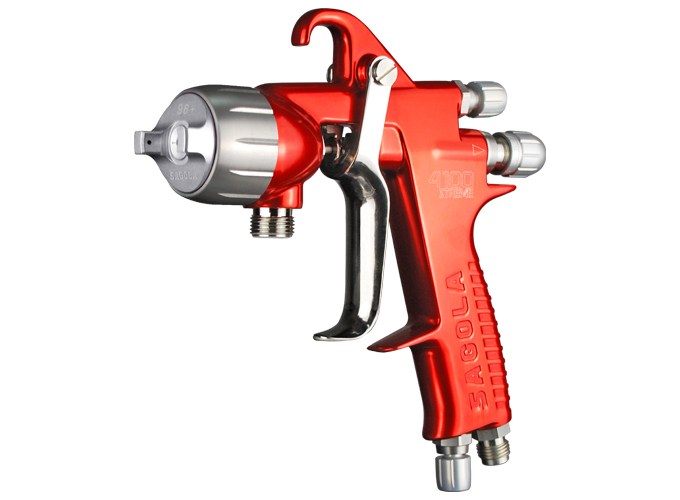
- Sagola X 4100 Series Pressure Spray Gun – A versatile, high-performance spray gun designed for demanding industrial applications where excellent atomisation, durability and finish quality are required.
- Sagola 3300 GTO Pressure Spray Gun – A reliable and robust spray gun offering excellent performance for general industrial finishing applications.
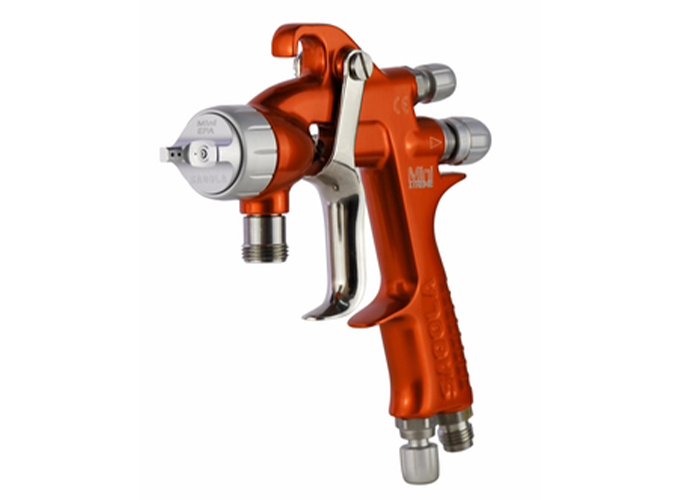
- Sagola Mini Xtreme Pressure Spray Gun – A compact pressure feed solution ideal for smaller components, specialist applications and areas where accessibility is important.
Each spray gun is designed to provide reliable coating delivery and consistent finishing performance across a wide range of industrial applications.
A complete pressure feed spray system typically includes:
- Pressure feed spray gun
- Pressure pot (also known as tank), or pump
- Air supply with suitable filtration
- Air and fluid hoses
- Fluid regulator (where required)
- Correct fluid nozzle and air cap combination
Using clean, dry and oil-free compressed air is essential to achieve consistent atomisation and prevent coating defects.
Elcometer can help recommend the correct combination of spray gun, fluid supply equipment and accessories for your application.
Selecting the correct fluid nozzle is essential for achieving consistent atomisation and finish quality.
As a general guide:
- Smaller nozzle sizes are suitable for lower-viscosity coatings and fine finishing applications.
- Medium nozzle sizes are commonly used for general industrial coatings.
- Larger nozzle sizes are better suited to primers and higher-viscosity materials.
The ideal nozzle size also depends on the spray technology, coating manufacturer's recommendations and the finish being produced.
If you're unsure which nozzle is most suitable, it's always advisable to consult the spray gun manufacturer's recommendations or seek technical advice before beginning production.
Regular cleaning is essential to maintain spray performance and extend the service life of your spray gun.
After each use, flush the spray gun and fluid lines using the appropriate cleaning solution, then clean the air cap and fluid nozzle thoroughly. Inspect the nozzle, needle and other wear components regularly, and replace worn parts as required.
Before beginning any spraying operation, it's also good practice to carry out a test spray to confirm that the spray pattern and atomisation remain consistent. Routine maintenance helps reduce downtime and ensures reliable finishing performance.
When using an Elcometer spray pump, visit our YouTube channel for step-by-step demonstrations showing how to correctly flush and prime your equipment.