

Elcometer 1800 Density Cup
- Industrial Finishing
- Laboratory & Physical Test
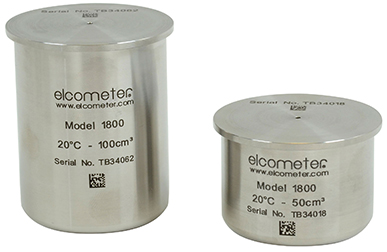
The Elcometer 1800 Density Cup (Picnometer) is a stainless steel precision cup for determining the specific gravity or density of paints and similar products.
- Summary
-
Summary
-
The density cup consists of a cylindrical container and lid with a hole for the exhaust of excess liquid.
-
- Key Features
-
Key Features
Elcometer 1800 Density Cup
How to use a Density Cup (Pyknometer)
 1. Weigh the cup and lid when empty
 2. Fill the cup with liquid to the very top

3. Place lid on the Cup, removing excess liquid*
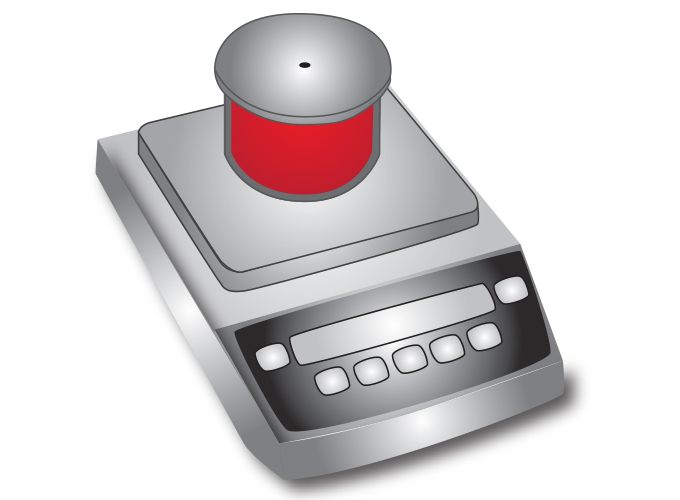
4. Weigh the Density Cup when full
5. Divide the weight of the liquid by the cup volume/capacity to determine the Specific Gravity
The formulae for calculating Density and Specific Gravity are:
Density = Liquid Weight / Cup VolumeSpecific Gravity = Density of the Material / Density of Water at the Same Temperature
Note:
50cc = 50cm³ = Volume
100cc = 100cm³ = Volume*Each Cup has an escape hole in the lid to allow excess liquid to escape. Any excess liquid should be removed before weighing.
-
- Technical Information
-
Technical SpecificationElcometer 1800 Density Cup
Part Number Description Volume/Capacity Certificate K0001800M001 Elcometer 1800/1 Density Cup Stainless Steel 50cc 
K0001800M002 Elcometer 1800/2 Density Cup Stainless Steel with calibration certificate 50cc 
K0001800M005 Elcometer 1800/5 Density Cup stainless steel 100cc
K0001800M006 Elcometer 1800/6 Density Cup stainless steel with calibration certificate 100cc
Part Number Certificate K0001800M001
Description Elcometer 1800/1 Density Cup Stainless Steel Volume/Capacity 50cc Part Number Certificate K0001800M002
Description Elcometer 1800/2 Density Cup Stainless Steel with calibration certificate Volume/Capacity 50cc Part Number Certificate K0001800M005
Description Elcometer 1800/5 Density Cup stainless steel Volume/Capacity 100cc Part Number Certificate K0001800M006
Description Elcometer 1800/6 Density Cup stainless steel with calibration certificate Volume/Capacity 100cc ● Certificate supplied as standard.- Standards
-
StandardsElcometer 1800 Density Cup
ASTM D 891-B, ASTM D1475, DIN 53217-2, FTMS 141 4183, ISO 2811-1, JIS K 5600-2-4, NBN T22-110, NFT 30-020
Standards in grey have been superseded but are still recognised in some industries.
- Downloads
-
Downloads
-
Error filtering template: Argument 'value' must be type of string, NULL given.
-

Elcometer 1800 Density Cup Stainless Steel Instruction Manual
-

Elcometer 1800 Density Cup Stainless Steel Datasheet
- Part Numbers
-
Part NumbersElcometer 1800 Density Cup
-
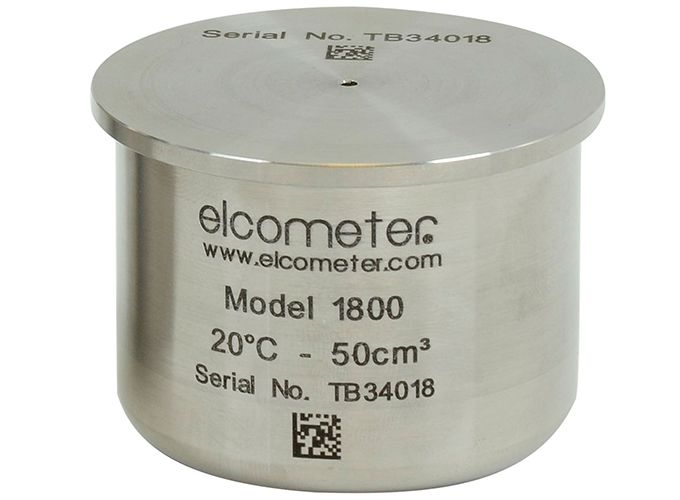 Elcometer 1800/1 Density Cup Stainless Steel
- Volume/Capacity: 50cc
- Part Number : K0001800M001
-
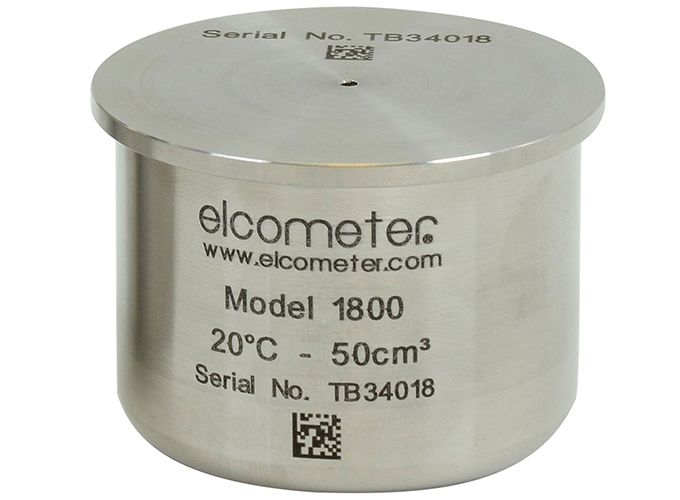 Elcometer 1800/2 Density Cup Stainless Steel with calibration certificate
- Volume/Capacity: 50cc
- Part Number : K0001800M002
-
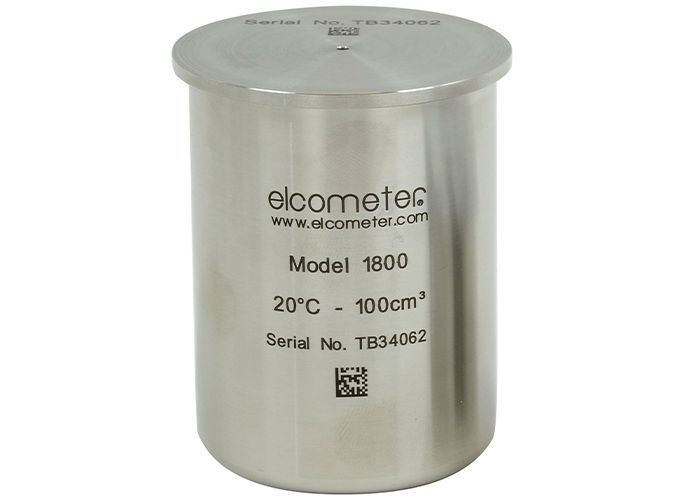 Elcometer 1800/5 Density Cup stainless steel
- Volume/Capacity: 100cc
- Part Number : K0001800M005
-
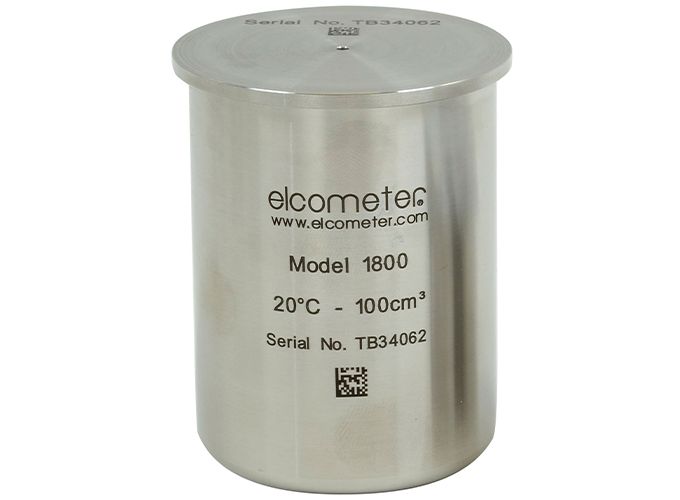 Elcometer 1800/6 Density Cup stainless steel with calibration certificate
- Volume/Capacity: 100cc
- Part Number : K0001800M006
Elcometer 1800 Density Cup
- Industrial Finishing
- Laboratory & Physical Test
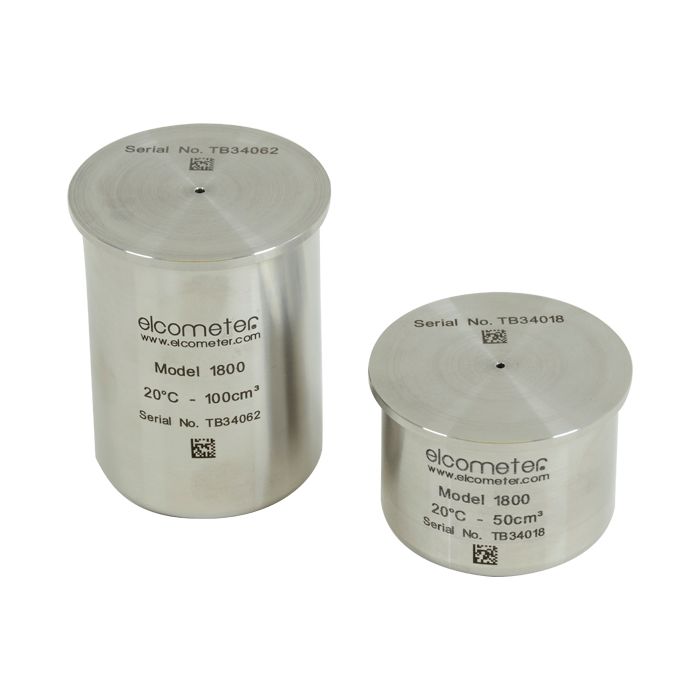
The Elcometer 1800 Density Cup (Picnometer) is a stainless steel precision cup for determining the specific gravity or density of paints and similar products.
Summary
Elcometer 1800 Density Cup
The density cup consists of a cylindrical container and lid with a hole for the exhaust of excess liquid.
Key Features
Elcometer 1800 Density Cup
How to use a Density Cup (Pyknometer)
1. Weigh the cup and lid when empty2. Fill the cup with liquid to the very top3. Place lid on the Cup, removing excess liquid*
4. Weigh the Density Cup when full
5. Divide the weight of the liquid by the cup volume/capacity to determine the Specific Gravity
The formulae for calculating Density and Specific Gravity are:
Density = Liquid Weight / Cup VolumeSpecific Gravity = Density of the Material / Density of Water at the Same Temperature
Note:
50cc = 50cm³ = Volume
100cc = 100cm³ = Volume*Each Cup has an escape hole in the lid to allow excess liquid to escape. Any excess liquid should be removed before weighing.
Downloads-
Error filtering template: Argument 'value' must be type of string, NULL given.
-
Elcometer 1800 Density Cup Stainless Steel Instruction Manual
-
Elcometer 1800 Density Cup Stainless Steel Datasheet
Technical SpecificationElcometer 1800 Density CupPart Number Description Volume/Capacity Certificate K0001800M001 Elcometer 1800/1 Density Cup Stainless Steel 50cc
K0001800M002 Elcometer 1800/2 Density Cup Stainless Steel with calibration certificate 50cc
K0001800M005 Elcometer 1800/5 Density Cup stainless steel 100cc
K0001800M006 Elcometer 1800/6 Density Cup stainless steel with calibration certificate 100cc
Part Number Certificate K0001800M001
Description Elcometer 1800/1 Density Cup Stainless Steel Volume/Capacity 50cc Part Number Certificate K0001800M002
Description Elcometer 1800/2 Density Cup Stainless Steel with calibration certificate Volume/Capacity 50cc Part Number Certificate K0001800M005
Description Elcometer 1800/5 Density Cup stainless steel Volume/Capacity 100cc Part Number Certificate K0001800M006
Description Elcometer 1800/6 Density Cup stainless steel with calibration certificate Volume/Capacity 100cc ● Certificate supplied as standard.StandardsElcometer 1800 Density CupASTM D 891-B, ASTM D1475, DIN 53217-2, FTMS 141 4183, ISO 2811-1, JIS K 5600-2-4, NBN T22-110, NFT 30-020
Standards in grey have been superseded but are still recognised in some industries.
Part NumbersElcometer 1800 Density Cup-
Elcometer 1800/1 Density Cup Stainless Steel
- Volume/Capacity: 50cc
- Part Number : K0001800M001
-
Elcometer 1800/2 Density Cup Stainless Steel with calibration certificate
- Volume/Capacity: 50cc
- Part Number : K0001800M002
-
Elcometer 1800/5 Density Cup stainless steel
- Volume/Capacity: 100cc
- Part Number : K0001800M005
-
Elcometer 1800/6 Density Cup stainless steel with calibration certificate
- Volume/Capacity: 100cc
- Part Number : K0001800M006
Frequently Asked Questions
Paint density can be measured using a density cup, also known as a pycnometer. First weigh the empty cup and lid, then fill the cup with the paint, fit the lid and remove any excess material. Weigh the filled cup and subtract the empty cup weight to determine the weight of the paint. The density can then be calculated by dividing the weight of the paint by the known volume of the cup. The Elcometer 1800 Density Cup is designed for determining the density and specific gravity of paints and similar liquid products.
A density cup is a precision container with a known volume used to determine the density or specific gravity of a liquid. By comparing the weight of the empty cup with the weight of the cup when filled, the weight of a known volume of liquid can be calculated. The Elcometer 1800 is a stainless-steel density cup with a lid containing an escape hole to allow excess liquid to leave the cup.
A pycnometer, also known as a density cup or specific gravity cup, is used to determine the density or specific gravity of a liquid using a precisely known volume. The Elcometer 1800 Density Cup is a pycnometer designed for testing paints and similar products and is available with a 50cc or 100cc capacity.
Density describes the mass of a material per unit volume, while specific gravity compares the density of a material with the density of water at the same temperature. Specific gravity is therefore a ratio rather than a measurement of mass per unit volume. The Elcometer 1800 Density Cup can be used to determine both values from a liquid sample.
First determine the weight of the liquid by subtracting the weight of the empty density cup and lid from the weight of the filled cup and lid. Divide the resulting liquid weight by the known cup volume:
The density of a liquid can change with temperature, which means temperature should be controlled when accurate and repeatable measurements are required. Specific gravity also compares the density of the material with the density of water at the same temperature. When testing with the Elcometer 1800, the required test temperature should therefore be determined by the relevant test method or standard.
The required cup size can depend on the test method, available sample quantity and testing requirements. The Elcometer 1800 is available in both 50cc and 100cc capacities, with calibrated versions available for each size. The appropriate version should be selected according to the applicable test procedure and application requirements.
For reliable density measurements, ensure the cup is clean, completely filled and free from unwanted air pockets. After fitting the lid, excess liquid should be allowed to escape through the hole in the lid and removed before the cup is weighed. The Elcometer 1800 uses a precision-volume cup and lid with an escape hole specifically for removing excess material before measurement.
Density and specific gravity of paints and similar liquids can be measured according to a number of recognised standards. The Elcometer 1800 Density Cup can be used in accordance with standards including ASTM D1475 and ISO 2811-1, as well as a range of other national and international test methods.
-
- Standards
-